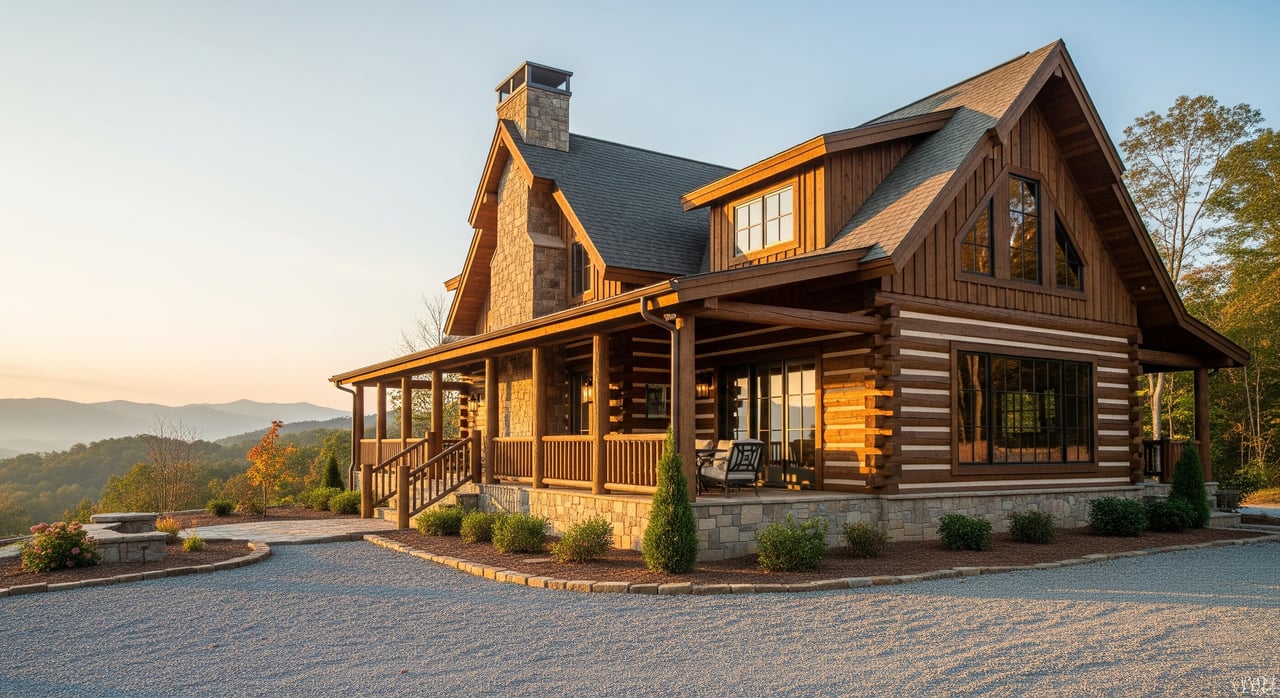
Thinking about a log cabin in Sevierville but not sure which construction type fits your plans? With our mountain weather, varied terrain, and strong vacation-rental market, the right choice can save you time, money, and stress over the long run. You want the rustic look you love along with smart maintenance, insurability, and financing. This guide breaks down the major construction types you will see around Sevier County, how they perform here, and what to consider before you buy. Let’s dive in.
Log cabin construction types
Full-log (solid log)
Full-log walls are stacked from solid logs that carry the structural load. You see the logs inside and out, which creates the classic cabin look that many buyers want around the foothills and ridge settings. Expect ongoing care to protect the logs from moisture, sun, and insects. With proper maintenance, full-log homes can be a long-lasting investment.
D-log (half-log)
D-log homes use milled half-round logs to create the round-log look. They can be stacked or attached to a framed wall, which often makes interior finishing simpler. Exterior care feels similar to full-log because the curved faces are exposed to weather. Many buyers choose D-log to balance aesthetics with easier interiors.
Timber-frame
Timber-frame homes use heavy posts and beams for structure, with infill walls such as framed panels or SIPs. Interiors feel open with exposed timbers and joinery. Because the walls are not solid logs, you may see fewer settlement issues and more conventional exterior maintenance depending on the infill material. The style suits higher-end custom builds that emphasize dramatic interiors.
Log-sided (veneer or faux-log)
Log-sided homes are conventional framed houses with log-look siding. Options include vinyl, engineered wood, or thin log veneer. This is the most budget-friendly way to get a rustic appearance. Maintenance typically follows standard siding practices and can be lighter than full-log care, though materials weather differently in strong sun and heat.
Maintenance in Sevier County
Sevier County’s humid subtropical climate brings significant rainfall, hot summers, cool winters, and mountain microclimates. Moisture control, UV protection, and pest prevention are critical for any wood exterior. Here is how that plays out by type.
Full-log care
Reapply log-specific stain or sealant on a regular cycle, often every 3 to 7 years depending on product and sun exposure. Inspect chinking and caulk annually and repair gaps to keep water and air out. Plan for settlement allowances around doors, windows, and systems, and monitor high-exposure areas like roof eaves and porch posts for moisture. Schedule termite and carpenter-bee checks regularly.
D-log care
Maintain exterior stain and seal just as you would with full-log. Watch chinking or caulk lines and repair as needed. Interior areas that are framed and drywalled can be easier to maintain, but the exterior still needs the same attention to moisture and insects.
Timber-frame care
Protect exposed timbers with finishes or design features like deep eaves and covered porches. Maintain infill walls according to their material, which often mirrors conventional framed-house maintenance. Inspect connections and metal hardware for corrosion or water intrusion and address problems promptly.
Log-sided care
Follow manufacturer recommendations for paint or stain cycles if you have wood-based siding. Vinyl and engineered products need periodic cleaning and inspection for warping, fading, or damage, especially on sun-drenched elevations. Good drainage and flashing details make a big difference in longevity.
County-wide maintenance musts
- Keep roof overhangs, gutters, and downspouts clear and direct water away from wood.
- Seal and maintain decks and stairs, and remove debris to prevent moisture traps.
- Use properly sized HVAC and controlled ventilation to limit interior condensation.
- Schedule routine pest inspections for termites, carpenter ants, and carpenter bees.
- Before you buy, add a log-specific inspection to your standard home inspection.
Insurance and financing essentials
Insurance basics
Full-log, timber-frame, and log-sided homes are insurable. Insurers look closely at replacement cost because materials and specialized labor often cost more than conventional stick-frame. Expect your policy to reflect replacement cost rather than market value. You may earn premium credits for a metal roof, lightning protection, fire-conscious landscaping, up-to-date systems, and monitored alarms. Work with an insurer who understands log and timber construction in Sevier County and can reference other local clients.
Financing and appraisal
Conventional, FHA, and VA loans can finance log homes if they meet program standards and are habitable. Lenders commonly ask for plans, maintenance records, proof of recent resealing or chinking, and details on the structural and foundation systems. Appraisals can be challenging when comparable sales are limited, and some lenders may view highly customized cabins as having a narrower buyer pool. Ask lenders and appraisers about their log-home experience and share maintenance documentation to support valuation and underwriting.
Local site factors to weigh
Permits and codes
Sevier County and the municipalities of Sevierville, Pigeon Forge, and Gatlinburg require permits and inspections. Code standards vary by jurisdiction, so confirm requirements for foundations, electrical, plumbing, and energy before you build or remodel. If a neighborhood or HOA has design guidelines, review them for exterior finish and size rules.
Floodplains and slopes
Parts of Sevier County fall within FEMA-mapped flood zones, including areas near the Little Pigeon River and tributaries. Lenders may require flood insurance in mapped zones. Many cabins sit on slopes, where soil stability, drainage, and retaining walls add cost. Assess erosion control, site drainage, and access before committing.
Wildfire and vegetation
Forested mountain settings fall within wildland-urban interface concerns. Creating defensible space around structures, choosing ember-resistant vents, and selecting appropriate roofing can reduce risk and may help with insurance.
Utilities, septic, and wells
Many rural or semi-rural parcels rely on septic systems and wells. Confirm septic capacity for your intended use, especially if you plan short-term rentals, and obtain recent well testing. Elevation and site conditions can affect water quality and well depth.
Short-term rental rules
If you plan to rent, review local rules and lodging tax requirements for your specific municipality. Registration and enforcement can vary. Factor increased wear-and-tear into your maintenance budget.
Choose the right fit
- Prioritize your look and layout. For the most authentic interior and exterior, consider full-log. For open interiors with dramatic beams, look at timber-frame. For a balance of look and ease, review D-log or log-sided.
- Match maintenance to your lifestyle. Full-log and D-log demand more frequent staining and chinking checks. Timber-frame and log-sided can reduce log-specific upkeep.
- Think about financing and insurance. Unique or highly customized properties may need larger down payments and specialty insurance sizing.
- Evaluate the lot. Steep slopes, heavy tree cover, and high sun exposure influence durability, cost, and required finishes.
- Plan for rental use. Heavier guest traffic increases finish wear; choose materials and a maintenance plan that support your occupancy goals.
Buyer due diligence checklist
- Schedule a log-home-specific inspection in addition to a standard home inspection.
- Request maintenance records for staining, sealing, chinking, roof and deck work, termite treatments, and any structural repairs.
- Contact lenders and insurers early to confirm requirements for log or timber construction.
- Verify septic permits and inspection reports, plus recent well testing if applicable.
- Review flood maps for the property and confirm permitting with the county or relevant municipality.
- If building, choose a builder experienced with your chosen system and confirm access, utilities, and foundation feasibility.
Where you see each style
You will find full-log and D-log homes on mountain and ridge lots throughout the foothills toward the Great Smoky Mountains, often where views are a priority. Timber-frame designs appear in custom builds that highlight open interiors and prominent beams. Log-sided homes are common in cost-conscious subdivisions, including areas oriented to vacation rentals closer to Pigeon Forge and Gatlinburg. Lot topography, access, and microclimate often make one approach more practical than another.
Ready to compare options?
Whether you are buying a second home, planning a custom build, or evaluating a rental-friendly cabin, you deserve a clear plan for maintenance, insurance, financing, and long-term value. Our team serves Sevier County buyers with local perspective and a step-by-step process that keeps you informed and confident. When you are ready, connect with The Cook Team to walk through options, review due diligence, and map the right next steps.
FAQs
What are the main log cabin types in Sevierville?
- You will most often see full-log, D-log, timber-frame, and log-sided homes, each with different maintenance, cost, and aesthetic profiles.
Which log construction needs the most upkeep?
- Full-log and D-log typically require the most frequent exterior sealing and chinking maintenance; timber-frame and log-sided often require less log-specific care.
Can I insure a full-log cabin in Sevier County?
- Yes. Insurers focus on replacement cost and risk factors; mitigation like metal roofing, updated systems, and monitored alarms may help with premiums.
Are FHA or VA loans possible for log homes?
- Yes, if the property meets program standards for habitability and safety; appraisers and underwriters will review structure, systems, and condition.
How often do logs need restaining in this climate?
- Many systems call for reapplication every 3 to 7 years depending on product choice and sun exposure; inspect annually to adjust your schedule.
Do log homes hold value in the Sevier County market?
- Quality construction, documented maintenance, and proximity to amenities support resale; highly customized cabins may have a narrower buyer pool.